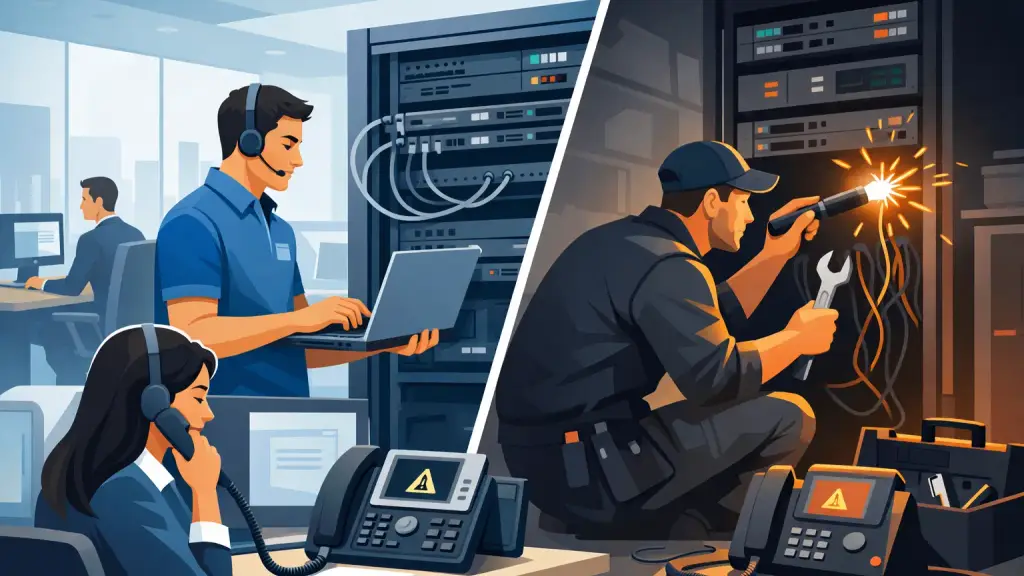
A phone system rarely fails at a convenient time. A voicemail card stops responding before the morning rush. A receptionist loses transfer capability. An office moves a few extensions and discovers the system programming was never documented. For businesses relying on established phone equipment, the choice between PBX maintenance versus breakfix service determines whether these problems become brief disruptions or operational emergencies.
The right answer is not always the same. A small office with simple call handling and limited usage may be comfortable calling for help only when an issue occurs. A medical practice, manufacturer, property management company, or multi-location business that depends on every inbound call needs a more deliberate support strategy. The decision should be based on downtime risk, system condition, internal capabilities, and how critical the phones are to daily operations.
PBX Maintenance Versus Breakfix Service: The Core Difference
Breakfix service is reactive. When a handset, card, power supply, voicemail unit, trunk, or programming feature fails, you call a technician to diagnose and repair the specific issue. It can be the appropriate choice for isolated problems, especially when a system has been stable and the business can tolerate some disruption while service is arranged.
PBX maintenance is proactive and ongoing. The objective is to keep the system reliable by identifying weaknesses before they interrupt service, maintaining accurate programming records, addressing recurring faults, testing key functions, and providing a known technical resource when changes or emergencies arise. A maintenance relationship also gives a service provider a working history of the equipment, previous repairs, cabling layout, extensions, and business call flow.
The distinction matters because legacy PBX failures are not always isolated. A failed component can be the visible result of an aging power source, heat issue, damaged wiring, outdated backup configuration, or years of unrecorded programming changes. Repairing only the symptom may restore calls today while leaving the underlying risk in place.
When Breakfix Service Makes Sense
Breakfix support is often a practical fit when the phone system is straightforward, the business has a low volume of inbound calls, and a short service interruption will not significantly affect customers or revenue. It also works for a one-time need, such as adding a few extensions, relocating phones within an office, replacing damaged cabling, or resolving a clearly defined problem.
For example, an office may have a Panasonic, Nortel, Avaya, Vodavi, or NEC system that has operated reliably for years. If one phone will not power on but the rest of the system is functioning, a targeted repair may be all that is needed. There is no reason to create a larger project when the issue is contained and the system remains healthy.
The trade-off is uncertainty. A breakfix provider starts with limited context every time an issue occurs. They may need to identify the equipment, trace the fault, review undocumented programming, and determine whether replacement parts are available. That diagnostic process is necessary, but it can add time when employees and customers are already affected.
Breakfix is also less suitable when a business repeatedly experiences the same issue. Frequent voicemail problems, intermittent dial tone, dropped calls, extension failures, or confusion after staff changes are signals that the system needs broader attention. At that point, treating each incident as unrelated can create more disruption than a planned maintenance approach.
What Ongoing PBX Maintenance Protects
Maintenance is not just a scheduled visit. It is a continuity plan for a business communication system that may be older but still essential. A qualified PBX technician can evaluate the condition of critical hardware, review recurring trouble tickets, verify backups where available, inspect connections, and keep programming organized as departments, employees, and call-routing needs change.
That ongoing familiarity becomes especially valuable during an emergency. A technician who already knows the system can focus on restoring service rather than spending the first hour determining how the equipment was configured. For businesses that route sales calls, schedule appointments, coordinate field teams, or support customers by phone, that response time can protect far more than convenience.
Maintenance also reduces the risk created by small changes. Phone systems are often altered over years by multiple administrators, office moves, staff turnover, and vendor visits. A new auto attendant greeting, a call-forwarding adjustment, an extension reassignment, or a move to a different suite can affect more than the person making the request expects. Consistent oversight keeps those changes controlled and documented.
A maintenance plan does not mean a legacy PBX will never fail. Older equipment has finite life, and some parts are harder to source than others. It does mean the business is more likely to understand its exposure before a failure becomes a full phone outage.
Questions to Ask Before Choosing a Support Model
Start with the business impact of lost phone service. If callers can leave a message, employees can work around the issue, and a delay of several hours is manageable, breakfix may be sufficient. If missed calls mean lost orders, missed patient appointments, delayed dispatches, or service failures, proactive maintenance is usually the safer choice.
Next, assess the age and history of the system. A PBX that has received regular care and has stable hardware may need less frequent intervention than one with intermittent issues, aging cabinets, undocumented programming, or previous water, power, or cabling damage. The make and model matter, but the system's service history often tells a more useful story.
Finally, consider internal responsibility. Many businesses no longer have an employee who understands their phone system. If the only person who knew the programming retired or left years ago, maintenance provides accountability before a critical change or failure forces a rushed search for help.
A Practical Approach for Legacy PBX Systems
The strongest support plan begins with an honest assessment, not an automatic recommendation to replace equipment. A legacy system can continue serving a business well if it is stable, meets current call-handling requirements, and can be maintained with available expertise and parts. There is value in extending the life of equipment that still performs its job reliably.
At the same time, maintenance should create a clear path forward. If repair frequency rises, replacement components become difficult to obtain, or the business needs remote users, easier multi-location management, and greater flexibility, it may be time to evaluate a hosted VoIP platform. That decision should be planned around business needs, not made under pressure during an outage.
A capable telecom partner can support both realities: maintain the existing PBX properly and help the organization modernize when the timing is right. This avoids the false choice between ignoring an older system and replacing it prematurely.
For Chicago-area organizations with legacy phone infrastructure, local on-site expertise is particularly useful when the issue involves cabinets, wiring, station equipment, or programming that cannot be solved remotely. iTeleco provides fast-response repair, maintenance, installation, relocation, cabling, programming, and 24/7 emergency support for businesses that need their communications restored quickly.
Choose Support Based on Downtime, Not Habit
Many businesses stay with breakfix simply because that is how they have always handled phone issues. That approach can work until the system becomes harder to diagnose, a key part fails, or an outage occurs at the worst possible moment. The better question is not whether the PBX is old. It is what a loss of phone service would cost the organization in missed opportunities, employee time, and customer confidence.
If that answer is significant, proactive maintenance is a sensible operational safeguard. If the risk is limited and problems are truly occasional, responsive breakfix service can remain a cost-conscious option. Either way, keep current records, know who will respond when service is interrupted, and address recurring problems before the next busy day puts the system to the test.