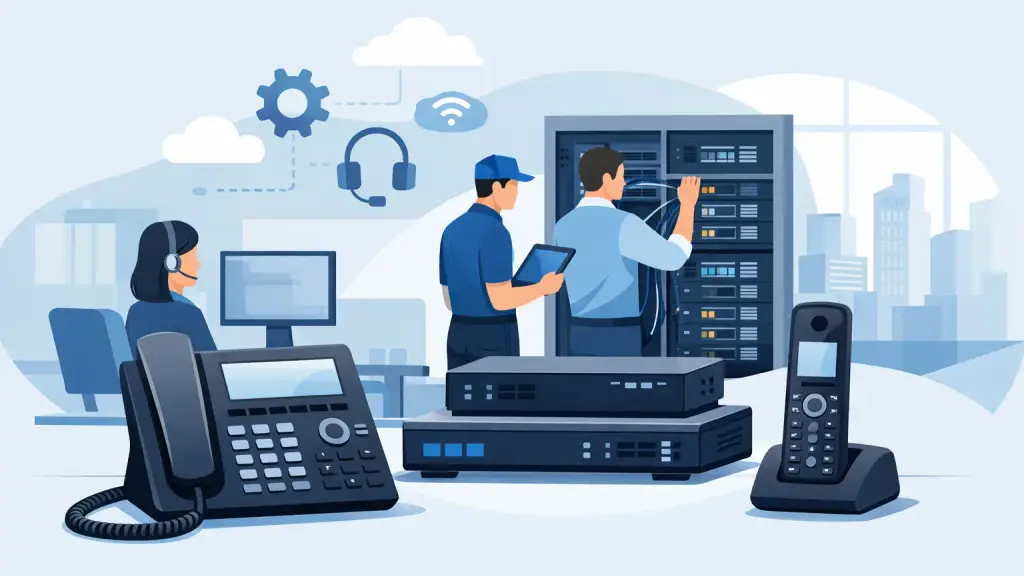
A phone system does not need to be new to be dependable. It needs to be supported, properly programmed, and matched to the way your business operates. This Panasonic phone system review looks at what legacy Panasonic PBX systems still do well, where their limits appear, and how to make a sound decision before a phone outage forces one.
For many established offices, Panasonic systems have earned their place. They are familiar to staff, reliable when maintained, and capable of handling the everyday call flow that keeps sales, scheduling, customer service, and operations moving. The real question is not whether a Panasonic system is old. It is whether it remains serviceable, secure enough for your needs, and practical to support over the next several years.
Panasonic Phone System Review: Where It Performs Well
Panasonic business phone platforms were widely installed because they gave small and mid-sized organizations practical PBX features without unnecessary complexity. Many systems continue to support multi-line calling, voicemail, extensions, auto attendants, call forwarding, paging, door access integration, and basic call reporting. For an office that has stable staffing, a consistent location, and dependable cabling, that feature set may still be exactly what is needed.
The strongest point in favor of a Panasonic PBX is continuity. Employees already know which buttons to use. Receptionists understand the call handling process. Existing wiring, handsets, voicemail workflows, and department extensions are in place. Replacing a working system simply because it is not new can introduce avoidable disruption.
Panasonic systems can also be very dependable in a well-maintained environment. A properly installed PBX does not rely on every desk phone having its own internet connection. If the system has clean power, functioning backup equipment, healthy cards, and trained support behind it, it can deliver consistent performance for years.
This is especially relevant for businesses that cannot tolerate a drawn-out transition. Medical offices, property managers, service businesses, professional offices, warehouses, and multi-department organizations often need the phones to work the same way every morning. A repair or targeted upgrade can be the lower-risk decision when the existing platform still fits operational needs.
The Limits of Legacy Panasonic PBX Systems
Reliability is not the same as long-term supportability. Panasonic legacy phone systems can become harder to maintain as equipment ages and replacement parts become less available. A system may be running well today while still carrying risk in its processor, power supply, voicemail unit, expansion cards, batteries, or older handsets.
The biggest issue is usually not a single broken phone. It is the availability of qualified technicians who can diagnose the full system. A busy signal across multiple extensions, phones that will not ring, voicemail failures, intermittent static, dropped outside lines, or failed paging can all point to different causes. The issue may be with the carrier service, a line card, the main cabinet, programming, cabling, or a handset. Guesswork wastes time when employees and customers are waiting.
Legacy platforms may also be less flexible for organizations with changing work patterns. If your business needs employees to answer calls from multiple locations, use a mobile application as an extension, add users frequently, or manage calls centrally across several offices, a traditional on-premise PBX may require workarounds. It depends on the specific Panasonic model, the installed cards, your carrier connection, and how the system was originally programmed.
There is also a planning issue. When a critical component fails, the best answer may not be to replace the component at any cost. If your organization has already outgrown the platform, repeated repairs can delay a transition without solving the underlying problem. The right move is based on the condition of the system and the business requirements behind it, not on a general rule that all older equipment should be replaced.
Signs Your Panasonic System Is Worth Repairing
Repair is often the sensible option when the failure is isolated, replacement hardware is available, and the current system still supports your call volume and workflows. Common examples include a faulty handset, damaged station cabling, programming changes after staff turnover, voicemail configuration issues, a bad card, or an outside-line problem that can be identified and corrected.
A repair-first approach makes sense when your team is satisfied with the system and downtime is the immediate concern. It can also give your business time to plan a future upgrade properly instead of making an expensive decision during an emergency.
Before authorizing major work, ask a technician to assess the age and condition of the core equipment, the status of power protection, the availability of compatible parts, the health of the cabling, and any recurring trouble history. That assessment turns a repair call into a useful decision point.
Signs It May Be Time to Modernize
A hosted VoIP platform is worth considering when phone requirements have changed more than the existing system can accommodate. This may include adding remote employees, opening another office, needing easier administration, improving disaster recovery, or replacing equipment with repeated failures.
Modernization may also be appropriate if a business is depending on aging components that are increasingly difficult to source. A planned migration lets you document call flows, preserve important numbers, train staff, and set up features before the old system reaches a failure point. That is very different from attempting to replace an entire phone environment after a major outage.
Hosted VoIP is not automatically better for every business. It depends on internet reliability, network readiness, call volume, office layout, and the level of mobility your employees need. A knowledgeable provider should evaluate those conditions before recommending a change. If the internet connection or internal network is not ready, moving phones to the cloud without preparation can create new problems.
What to Check Before Making a Decision
Start with the operational facts. How many users rely on the system? Are calls being missed? Does voicemail work consistently? Are employees requesting remote calling capability? Has the business added locations or departments since the Panasonic system was installed? These answers matter more than the age printed on the cabinet.
Next, look at failure risk. A one-time handset replacement is different from a PBX that has suffered repeated card failures, power events, or unexplained intermittent outages. Review whether your system has a working battery backup and surge protection. Telephone equipment is often treated as invisible infrastructure until a power event or cabinet failure stops customer calls.
Finally, consider support. A legacy system should have a clear service plan: who can respond after hours, who has the programming access, who can obtain compatible parts, and who understands both the phone system and the cabling that supports it. Without that accountability, even a minor issue can become extended downtime.
For businesses in Chicago and the surrounding suburbs, local field support matters when a cabinet, carrier connection, or wiring problem needs hands-on diagnostics. Remote assistance can solve some programming issues, but it cannot replace an on-site technician when the cause is inside the equipment room or above the ceiling tiles.
A Practical Path Forward for Panasonic Users
The best path is usually one of three options: maintain a stable Panasonic system, repair a specific fault while preparing for the future, or plan a controlled move to hosted VoIP. Each can be the right answer in the right situation.
A qualified telecom technician should be able to explain the trade-offs plainly. If the current system remains dependable and meets your needs, maintain it. If it has a correctable fault, repair it and document the condition of the equipment. If your communications needs have changed or hardware risk is becoming unacceptable, build a migration plan before an outage dictates the timing.
iTeleco supports Panasonic legacy phone systems with repair, programming, installation, cabling, relocation, user training, and 24/7 emergency service. The goal is not to push a replacement before it is necessary. It is to keep business communications working and provide a realistic path forward when your existing system no longer serves the business.
A Panasonic system should be judged by the calls it helps your organization handle, the support available when something breaks, and the flexibility you need next. If those answers are clear, your phone decision will be far less stressful than waiting for the next outage.