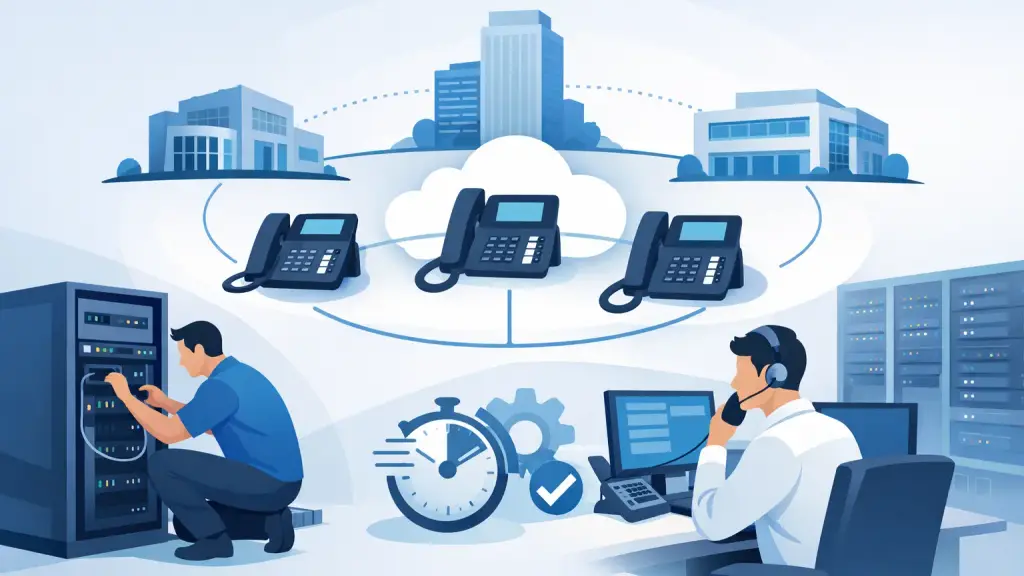
A missed call at one location can be an inconvenience. Missed calls at five locations can become a sales problem, a scheduling problem, and a customer-service problem before anyone realizes the systems are being managed differently. Multi site phone consolidation gives organizations one clear plan for how calls are routed, how equipment is supported, and who is accountable when service fails.
For companies with offices, warehouses, clinics, branches, or retail locations, consolidation does not always mean replacing every phone system at once. In many cases, the practical first move is to bring support, documentation, call-flow standards, and upgrade decisions under one experienced telecom partner. That approach protects daily operations while giving leadership a realistic path forward.
Why Separate Phone Systems Create Avoidable Risk
Multi-location businesses often grow their phone infrastructure one site at a time. A new office inherits an existing PBX. A branch adds lines through a different provider. One location moves to hosted VoIP while another continues using a reliable but aging Panasonic, Nortel, Avaya, NEC, Vodavi, or similar system.
That arrangement can work for years, until it does not. When each site has different programming, service records, vendors, and emergency contacts, routine changes take longer and outages become harder to diagnose. An office manager may not know whether a problem is tied to the carrier, cabling, phone system, voicemail, network, or a single handset. Meanwhile, callers only know they cannot reach the business.
The operational cost is not limited to downtime. Separate systems make it harder to standardize extension dialing, after-hours coverage, call forwarding, auto attendants, and employee moves. They also create uncertainty during a relocation, lease change, or staffing shift. Consolidation replaces that patchwork with a controlled operating model.
What Multi Site Phone Consolidation Actually Means
A consolidated phone environment is not necessarily one identical platform in every building. It is a coordinated communications strategy that gives the business consistent control across locations.
For one company, that may mean maintaining several legacy PBX systems while using common documentation and a single technical support contact. For another, it may mean connecting locations through shared call routing while planning a phased move to hosted VoIP. A third business may need one headquarters system to handle main numbers and overflow calls, while remote sites retain local equipment because it still meets their needs.
The right design depends on call volume, existing hardware condition, staffing, network readiness, building layouts, and how often each location changes. A company should not replace working equipment simply because it is older. But it should know which systems are approaching a support, capacity, or reliability limit before an emergency forces a rushed decision.
Consolidation should improve accountability
The strongest benefit is simple: everyone knows who owns the issue. With one telecom partner, the business has a consistent source for troubleshooting, programming, repairs, moves, cabling, and system planning. That reduces the time spent deciding who to call when phones go down.
A qualified provider can also maintain records for each site, including system type, voicemail setup, line assignments, carrier information, extension ranges, programmed call paths, and known hardware concerns. Accurate records turn an urgent service call into a faster diagnosis.
Start With a Site-by-Site Communications Audit
Before changing equipment or moving numbers, document what is in place. This is where many consolidation projects either gain momentum or create unnecessary problems. Leadership needs a clear view of what each location relies on, not assumptions based on old invoices or employee memory.
A useful audit examines the main business number and direct inward dialing numbers, the PBX or hosted platform in use, phone and voicemail features, carrier services, internet and network dependencies, physical cabling, emergency-call configuration, and backup plans during an outage.
It should also identify the people responsible for each location. A system can be technically sound yet difficult to manage if no one knows who has access to voicemail administration, auto-attendant recordings, or call-routing changes.
When evaluating older PBX equipment, distinguish between age and condition. Many legacy systems remain dependable when they are properly maintained, programmed, and supported with available parts. The more urgent concern is often undocumented programming, discontinued components, poor cabling, or a lack of qualified service when something fails.
Standardize the Caller Experience First
Customers should not have to learn a different calling experience for every location. Standardization can begin without a full system replacement.
Set clear rules for how calls reach each office, how after-hours calls are handled, where overflow calls go, and what happens when a department is unavailable. Establish a consistent approach for greetings, directory options, voicemail instructions, and emergency forwarding. If an employee transfers between locations, consider whether their extension, voicemail access, and caller ID can follow them.
This is also the time to review your main-number strategy. Some businesses benefit from a central number with location-specific menus. Others need each branch to keep its established local identity while sharing backup coverage. There is no single answer. The decision should reflect how customers contact the business and how teams actually handle calls.
A good call-flow plan includes failure scenarios. If the main site loses service, where should calls go? If a location closes early, who answers? If internet service is interrupted at a hosted location, what is the backup procedure? These questions are far easier to answer before an outage.
Choose a Phased Path for Legacy PBX and VoIP
For businesses running a mix of equipment, a phased approach is usually safer than a wholesale cutover. It allows each site to move when its system condition, business needs, and infrastructure justify the change.
A practical plan may keep a well-functioning legacy PBX at one office while migrating a newer or rapidly growing site to hosted VoIP. It may include cabling improvements during a renovation, programming updates to improve call coverage, and replacement of unreliable phones or modules before they fail. The objective is continuity, not change for its own sake.
Hosted VoIP can make multi-site administration easier when the network is properly prepared and the platform matches the organization's needs. It can support flexible routing, remote users, and more centralized management. However, it also depends on reliable internet connectivity, proper network configuration, power planning, and a clear response plan for local disruptions.
Legacy PBX systems have different strengths. They can be stable, familiar to staff, and well suited to buildings with established wiring and business processes. The trade-off is that parts availability, expansion requirements, and specialized programming may become more significant over time. An experienced telecom provider should explain both paths plainly rather than push a one-size-fits-all answer.
Build Emergency Support Into the Plan
Consolidation is tested during a failure, not during a planning meeting. A business needs to know what happens when a system stops accepting calls, a voicemail server fails, a cable is damaged, or a carrier circuit drops.
Create a current escalation process for every location. Specify who can authorize service, who can provide building access, where equipment is located, and how employees should communicate if the phones are unavailable. Keep carrier account details and critical phone-system records available to the right people.
For Chicago-area businesses with aging equipment, local field support matters. Some problems require on-site diagnostics, physical repairs, replacement hardware, cabling work, or programming at the system cabinet. Remote support can address many issues, but it cannot repair a failed power supply or damaged wiring from another city.
iTeleco provides 24/7 emergency repair and hands-on support for legacy business phone systems, while also helping organizations plan hosted VoIP upgrades when the time is right. That combination is valuable when different locations are at different stages of their communications lifecycle.
Make Consolidation an Ongoing Operating Practice
Once the environment is organized, keep it that way. Review call routing after staffing changes, document every major programming update, and test backup forwarding before it is needed. When a lease renewal, office expansion, or relocation is planned, involve telecom support early enough to assess wiring, equipment placement, carrier timing, and number continuity.
The goal is not to make every office identical. It is to make every location dependable, supportable, and connected to a plan that protects the business when a call cannot wait.