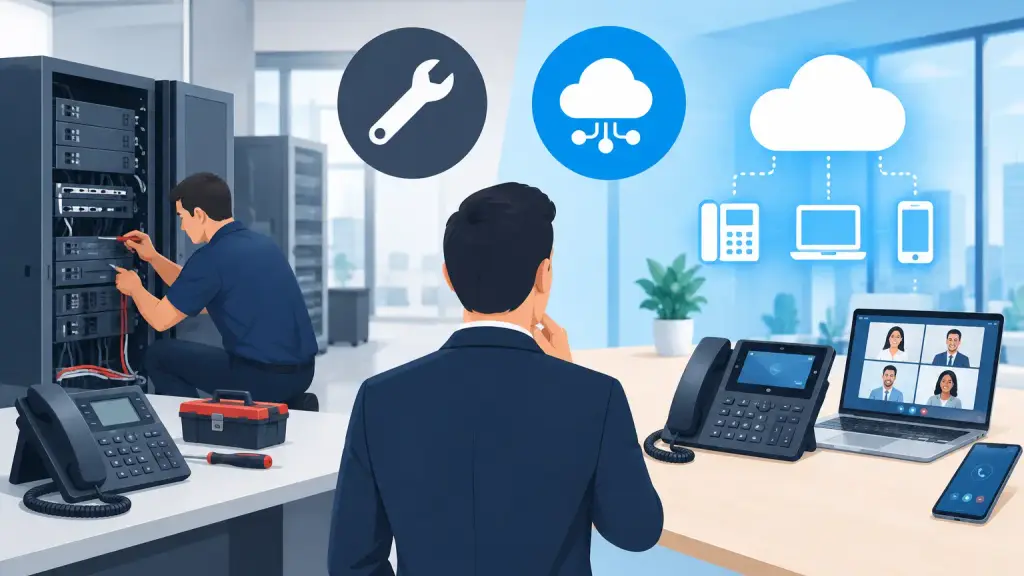
A failed Avaya phone system can stop orders, appointments, dispatch, and customer service within minutes. But one outage does not automatically mean your company needs a new phone platform. The right decision in Avaya repair versus VoIP migration depends on the condition of your system, the cause of the failure, your operational needs, and how much change your team can absorb without disruption.
For many Chicago-area businesses, repairing an existing Avaya system is the fastest way to restore dependable communications. For others, recurring hardware issues or changing work requirements make hosted VoIP the more practical long-term direction. The key is diagnosing the immediate problem while looking honestly at what the business will need next.
Start With the Business Impact, Not the Technology
When phones are down, the first priority is service restoration. A qualified technician should determine whether the problem is isolated to a handset, card, power supply, wiring issue, programming setting, carrier connection, or the PBX itself. Many issues that appear to be major system failures can be repaired without replacing the entire platform.
That matters when your staff already knows the Avaya phones, your call flow is working well, and downtime is the immediate risk. A targeted repair can preserve extensions, paging, door access integration, call coverage, and workflows your employees rely on every day.
Migration deserves consideration when the outage exposes a larger pattern: unavailable replacement parts, repeated failures, limited system capacity, unsupported software, or a setup that no longer matches how your team works. The goal is not to replace equipment because it is old. The goal is to avoid allowing an aging system to become an ongoing operational liability.
When Avaya Repair Is the Better Choice
Avaya repair is often the right move when the system has been reliable and the failure is specific, diagnosable, and correctable. A business with stable staffing, established office locations, and well-functioning call routing may gain little from rushing into a platform change during an emergency.
Repair also makes sense when your existing system supports critical functions that need careful planning before any transition. These may include overhead paging, analog lines, fax machines, alarm panels, elevator phones, door intercoms, specialty handsets, or site-specific cabling. None of these issues prevents a future VoIP migration, but they do require a deliberate plan.
A repaired Avaya system can give your organization time to make a better decision. Instead of approving a major change in the middle of an outage, you can restore communications, document the existing environment, and evaluate modernization on your own schedule.
Signs Your Existing Avaya System May Be Worth Repairing
Repair is generally a strong option when the problem is isolated, replacement components are available, and your phone system still meets current business needs. It is also practical when employees are primarily on-site and depend on existing features that have been programmed around established operations.
A local on-site technician can be especially valuable for older PBX systems because the issue may involve more than the main cabinet. Loose cross-connects, damaged cabling, failed power protection, incorrectly programmed ports, or handset problems can all affect service. Replacing the platform without identifying the actual fault can create unnecessary cost and disruption.
When VoIP Migration Is the Better Long-Term Move
Hosted VoIP changes the model from maintaining an on-premises PBX to using a cloud-based phone service delivered through your network connection. It can be a smart option for organizations that need easier expansion, more flexibility between locations, better support for remote staff, or simpler administration of users and call routing.
The strongest case for migration is usually a pattern, not a single event. If your Avaya system requires frequent emergency calls, cannot accommodate new users, has difficult-to-source components, or lacks the features your business now needs, continuing to repair it may only postpone a necessary transition.
A VoIP migration can also help multi-location organizations standardize communications. Instead of managing separate systems at each office, teams can use a shared platform with consistent dialing plans, extensions, call handling, and administrative controls. That can simplify moves, adds, and changes as the business evolves.
Still, VoIP is not simply a matter of replacing desk phones. Call quality and reliability depend on a properly assessed network, sufficient internet service, appropriate switching, power protection, and a plan for continuity if the primary connection is interrupted. A rushed migration can trade one problem for another.
Avaya Repair Versus VoIP Migration: Compare the Real Trade-Offs
The decision is rarely repair or replace forever. Many businesses benefit from a staged approach: repair the Avaya system now, stabilize operations, then develop a migration plan with testing and a controlled cutover date.
Consider four practical questions before choosing a direction:
- Is the current failure isolated, or has the system become a repeated source of downtime?
- Does the existing Avaya platform still support your staffing levels, call volume, and required features?
- Are there connected devices or workflows that must be retained, reconfigured, or replaced before a migration?
- Can your network and internal team support a successful hosted VoIP deployment without interrupting daily operations?
Repair generally offers the least immediate disruption. Your users keep familiar handsets and procedures, and the organization avoids making broad changes during a busy period. The trade-off is that legacy systems require continued attention, and component availability can become more challenging as equipment ages.
VoIP generally offers more flexibility for growth and distributed work. The trade-off is planning. A successful transition requires an accurate inventory of extensions, call paths, analog devices, cabling, network readiness, and user needs. It also requires training, because even a better platform can frustrate employees if the rollout is poorly communicated.
Do Not Let an Emergency Dictate the Entire Strategy
An emergency is the wrong time to make assumptions about your phone system. If calls are failing, start with fast diagnostics and restoration. Once the immediate issue is resolved, use the service visit to gather information that will support a sound long-term decision.
Document the age and condition of the PBX, the components that have failed, the availability of replacement parts, and the features employees use most. Review where your staff works today and where they are likely to work over the next several years. A front desk-heavy office with stable operations has different needs than a business with multiple locations, field employees, and frequent staffing changes.
It is also worth identifying what must not fail during a transition. Customer service lines, main numbers, hunt groups, paging, emergency calling, and specialized devices should all be addressed before a cutover is scheduled. This is where experienced legacy and VoIP support matters: the best plan protects what is already working while improving what no longer serves the business.
A Practical Path Forward for Illinois Businesses
For businesses in Chicago and the surrounding suburbs, local support can make the decision less complicated. An on-site assessment can identify whether the problem is repairable, whether the existing cabling and network are ready for a change, and whether a phased approach is the safest option.
iTeleco supports both sides of the decision: fast-response repair for legacy business phone systems and planned transitions to hosted VoIP when modernization is the right operational move. That means you do not have to choose between restoring service today and planning responsibly for tomorrow.
If your Avaya system is down, unstable, or becoming harder to maintain, start with an expert diagnosis rather than a guess. For 24/7 emergency phone system support or a practical assessment of your next steps, call 773-340-7777. The best communications decision is the one that keeps your business reachable now and prepared for the work ahead.