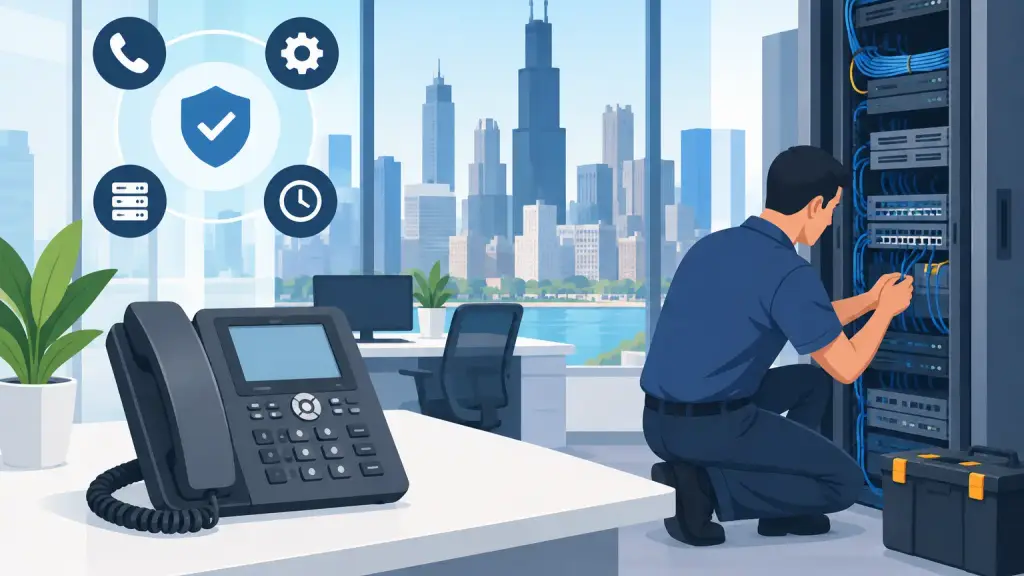
A phone system can appear stable for years, right up until a failed power supply, damaged station card, or programming error stops calls from reaching the people who need them. The practical PBX maintenance contract benefits are not about paying for unnecessary service. They are about having a qualified technician, a documented support process, and a response plan in place before a phone outage disrupts customers, staff, and revenue.
For Chicago-area organizations still relying on Panasonic, Nortel, Avaya, NEC, Vodavi, or other legacy business phone systems, that preparation matters. Many general IT providers can support a network, but diagnosing an older PBX often requires brand-specific knowledge, access to compatible parts, and hands-on field experience. A maintenance agreement gives the business a single accountable partner for that work.
Why PBX Downtime Creates a Bigger Business Problem
When desk phones go down, the immediate issue is obvious: callers cannot get through. The operational effects tend to spread quickly. A front desk cannot route calls, a sales team misses new opportunities, service teams cannot coordinate appointments, and managers lose a dependable line of communication with staff and vendors.
A partial outage can be just as damaging as a complete one. Perhaps inbound calls work, but outbound calls fail. Maybe one department has dead extensions while another cannot access voicemail. Intermittent problems can consume hours of internal troubleshooting without producing a clear answer. Meanwhile, employees create workarounds that may confuse customers or expose gaps in communication handling.
An active PBX maintenance contract changes the response from reactive searching to organized resolution. Your service provider already understands the system type, the environment, and the support expectations. That head start is valuable when every missed call has consequences.
PBX Maintenance Contract Benefits That Matter Day to Day
The strongest reason to maintain a service agreement is faster access to qualified help. When a failure occurs, your business does not need to locate a technician, explain the full history of the system, and wait for an unfamiliar provider to determine whether they can support the equipment. The provider can begin remote assessment or schedule on-site service with a clearer understanding of the situation.
Faster Diagnosis and Repair
Legacy PBX issues are not always visible at the phone itself. The source may be a cabinet component, card failure, voicemail integration, programming change, cabling fault, carrier handoff, or electrical issue. Experienced PBX technicians know how to isolate those possibilities without replacing parts blindly.
That diagnostic discipline reduces the risk of a long outage caused by guesswork. It also helps preserve equipment that is still serviceable. Older systems are often described as obsolete when the actual problem is a replaceable component or a configuration issue that can be corrected efficiently.
Planned Preventive Attention
Not every failure can be prevented, but many warning signs can be found before they become an emergency. A maintenance relationship creates opportunities to review system condition, identify aging components, verify backups and programming records, and address recurring trouble before it affects the whole office.
This is especially useful after office changes. New employees, departmental moves, expansions, carrier changes, and equipment relocations can all create phone system issues if programming and cabling are not updated correctly. Regular access to a PBX specialist helps keep those smaller changes from turning into support emergencies later.
Clear Accountability During an Outage
During a phone outage, office managers and IT teams need answers quickly. Who owns the issue? Is it internal cabling, the PBX, voicemail, the carrier connection, or a network-related component? A maintenance partner provides a defined place to start rather than sending staff between multiple vendors.
That accountability matters most for organizations without a dedicated telecom specialist on staff. Instead of asking an administrator to interpret technical alarms or locate discontinued hardware, the business can escalate the issue to people who work on phone systems every day.
Better Continuity for Multi-Location Operations
For companies with more than one office, a maintenance contract can bring consistency to changes, service calls, extension assignments, and system documentation. Standardized support is easier to manage than relying on different local technicians who may not understand how locations are connected or configured.
It also helps leaders make decisions based on the full communications environment. One site may have a legacy PBX that remains reliable, while another has outgrown its current setup and is better suited for hosted VoIP. A provider that understands both legacy infrastructure and modern business phone options can recommend the right path for each location instead of forcing a one-size-fits-all answer.
What a Good Maintenance Agreement Should Cover
The details of a maintenance arrangement should match the equipment, business hours, and operational risk of the organization. A medical office that depends on constant scheduling calls has different needs than a back-office location with limited inbound traffic. The value comes from defining expectations before an outage, not from assuming every issue receives the same response.
Ask practical questions about service coverage. How are emergency calls handled? Is remote troubleshooting available before a technician is dispatched? Can the provider perform on-site repair when needed? Do they have experience with your PBX brand and model? Are system programming records, extension information, and equipment history maintained so a technician is not starting from zero each time?
A useful agreement should also distinguish between routine service and emergency response. A request to add several extensions may be scheduled, while loss of dial tone, widespread extension failure, or a critical voicemail problem requires immediate attention. Clear priorities prevent frustration on both sides.
Maintenance Is Not the Same as Delaying Modernization
Some businesses assume that maintaining an older PBX means avoiding technology decisions indefinitely. That is not necessarily true. In many cases, a legacy system continues to serve the company well and deserves professional maintenance. Replacing stable equipment simply because it is older can introduce unnecessary cost, training demands, and operational disruption.
At the same time, there are situations where an upgrade should be evaluated. Repeated hardware failures, unavailable replacement parts, insufficient capacity, difficult remote access, or changing needs across multiple locations may point toward a hosted VoIP solution. The right maintenance partner should be candid about that distinction.
The best approach is usually phased and operationally driven. Maintain the existing PBX where it remains dependable. Correct the specific weaknesses that create risk. Then build a transition plan for the areas where newer capabilities genuinely improve reliability, flexibility, or supportability. This protects day-to-day communications while giving leadership time to make a sound decision.
When a PBX Maintenance Contract Is Most Valuable
A maintenance agreement is particularly worthwhile when the phone system supports customer-facing work, when downtime would create immediate disruption, or when internal staff do not have deep PBX expertise. It is also valuable after a business has experienced one difficult outage. That event often reveals how much institutional knowledge was tied to a former employee, an undocumented installer, or a vendor that no longer services the equipment.
Four signs that a business should formalize PBX support are:
- The current system is older but still central to daily calls and operations.
- Past phone issues took too long to diagnose or required several vendors.
- Programming, extension records, and system documentation are incomplete.
- Leadership needs a reliable emergency contact for critical communication failures.
For businesses in Chicago and the surrounding suburbs, local field service adds another layer of value. Some problems can be resolved remotely, but failed components, cabinet issues, damaged cabling, and physical moves require an on-site technician. iTeleco provides 24/7 emergency repair and hands-on support for organizations that cannot wait for a distant provider to find an available resource.
A PBX maintenance contract should give your team confidence, not paperwork. Keep the system maintained while it continues to support the business, document what you have, and make modernization decisions on your schedule rather than in the middle of a communications emergency.