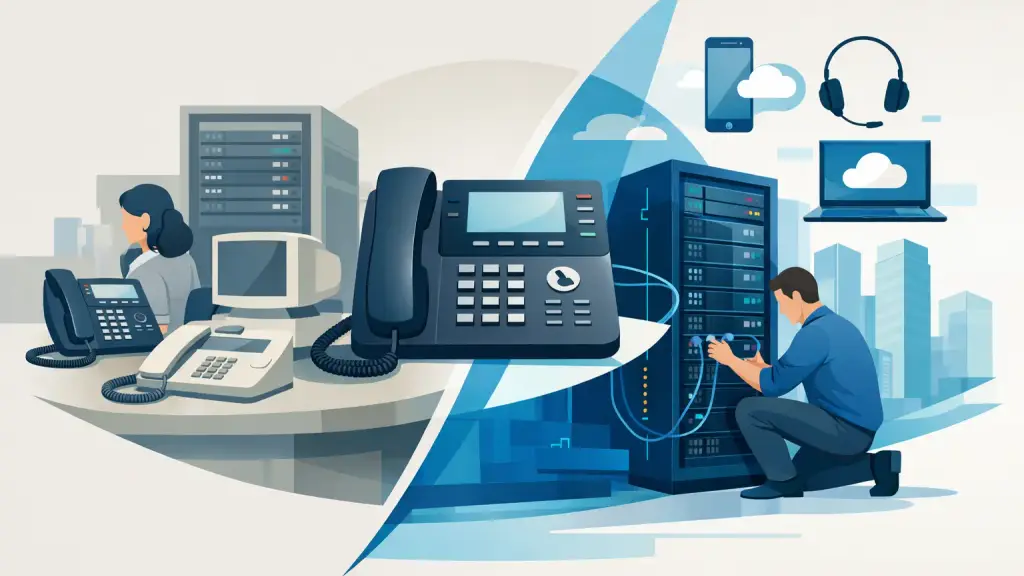
A working PBX system does not become a bad business decision simply because it is old. For many Chicago-area companies, the future of legacy phone systems is a practical question: can the system still support daily operations, can it be repaired quickly, and is there a sensible path forward when business needs change?
That answer is rarely an automatic replacement. A dependable legacy phone system can continue serving an office, warehouse, medical practice, school, or multi-location business for years when it is maintained by technicians who understand the equipment. At the same time, aging hardware, discontinued components, changing connectivity requirements, and remote-work expectations can make a planned modernization the better operational move.
The right decision starts with continuity. Phones need to ring, calls need to reach the right people, and a failure cannot be allowed to stall sales, scheduling, service, or customer support.
The Future of Legacy Phone Systems Is Not One-Size-Fits-All
Legacy PBX platforms from Panasonic, Nortel, Avaya, Vodavi, NEC, and other established manufacturers remain in use because they were built for business communications. Many still provide reliable extensions, voicemail, paging, call handling, and department-level routing. Staff know how to use them, and the system may already be integrated with door access, overhead paging, alarms, fax lines, or specialized equipment.
Replacing that infrastructure without a clear business reason can create disruption of its own. New equipment requires planning, programming, user training, number porting where applicable, and careful testing. If a business has a stable system that meets its needs, repairing and maintaining it is often the most responsible approach.
However, “it still works” should not be the only standard. The future depends on the condition of the equipment, the availability of replacement parts, the quality of existing cabling, the business’s growth plans, and the level of support available when a failure occurs. An older system with a qualified service partner is very different from an older system with no documentation, no spare parts, and no one who can respond after hours.
When Keeping a Legacy PBX Makes Sense
Repair is a sound choice when the system is stable, users are satisfied, and the business does not need capabilities that the current platform cannot reasonably provide. A failed power supply, damaged station card, faulty handset, programming issue, or cabling problem does not necessarily justify a complete replacement. It calls for accurate diagnostics and a fast repair.
Maintenance also matters more than many companies realize. PBX failures are often preceded by smaller warning signs: intermittent dial tone, dropped calls, noisy lines, voicemail issues, extensions that stop ringing, or a system cabinet that is running hot. Addressing those symptoms early can prevent a larger outage later.
A well-managed legacy environment should include current programming records, labeled cabling, a clear inventory of phones and modules, and a plan for common replacement parts. It should also have a defined escalation path for emergencies. For businesses that cannot afford phone downtime, waiting until the system fails is not a strategy.
The value of specialized field service
Legacy systems are not interchangeable. The technician who can diagnose a Nortel issue may need a different set of tools, parts, and programming knowledge for a Panasonic or NEC platform. Generic IT support can be valuable for networks and computers, but PBX repair often requires hands-on telecom experience.
That is particularly relevant in offices with older building wiring, analog lines, digital stations, paging adapters, or multiple sites connected through established call flows. A qualified technician needs to find the actual point of failure rather than replacing equipment based on assumptions. That can reduce downtime and avoid unnecessary changes to a system employees depend on.
Signs It Is Time to Plan an Upgrade
There is a difference between repairing a proven system and repeatedly extending the life of a system that no longer fits the business. The warning signs are usually operational, not cosmetic.
If adding users has become difficult, replacement parts are increasingly hard to source, or service calls are becoming frequent, leadership should begin evaluating options before an emergency forces the decision. The same is true when a company needs easier support for remote employees, multiple locations, call reporting, mobile access, or more flexible call routing.
Connectivity changes can also shape the decision. Some older PBX systems depend on traditional telephone line arrangements that may no longer be the best fit for a business. Others can remain in service with the right adapters or gateway configuration. The technical details matter, which is why an on-site review is more useful than broad assumptions about what an older system can or cannot do.
Security and business continuity deserve attention as well. A modern hosted VoIP platform can offer centralized management, flexible routing during an outage, and easier expansion. But those advantages depend on a properly designed network, sufficient internet reliability, power protection, and a clear failover plan. Moving to VoIP without addressing those fundamentals can simply trade one set of risks for another.
A Better Path: Repair Now, Modernize on Your Terms
For many organizations, the most sensible path is phased rather than abrupt. Continue supporting the legacy PBX while creating a documented modernization plan. This protects day-to-day operations and gives decision-makers time to evaluate what the business actually needs.
A phased plan may begin with documenting extensions, hunt groups, voicemail settings, call forwarding rules, paging connections, and service-critical phone numbers. It should identify systems connected to the PBX, including door phones, alarms, credit card terminals, fax equipment, and analog devices. These details are easy to overlook until cutover day, when an unplanned gap can affect operations.
Next, evaluate where the current system creates friction. Is it difficult to move an employee to a new desk? Are call routing changes dependent on outdated programming tools? Does a second location need better connectivity? Are managers spending too much time working around limitations? These are business questions first and technology questions second.
Hosted VoIP can be the right long-term option when flexibility, scalability, and location independence outweigh the value of keeping the existing hardware. It can also be a better fit for organizations that want to reduce their dependence on on-premises equipment. Still, a hosted platform should be configured around the way the business handles calls, not treated as a generic replacement.
Do not overlook cabling and user training
Phone upgrades often expose issues that were already present in the physical environment. Old cable runs, poorly labeled patch panels, inadequate power arrangements, and inconsistent network switches can complicate an otherwise well-planned project. Professional cabling and installation work help ensure that the new system performs as expected after it goes live.
User training is equally practical. Receptionists, managers, and frequent phone users need to know how to transfer calls, manage voicemail, update greetings, handle forwarding, and use emergency features. A system that offers more features but confuses staff can hurt service rather than improve it.
What Business Leaders Should Ask Before Deciding
The key question is not whether legacy or VoIP is universally better. Ask whether the current system supports the business reliably today and whether it can support the organization’s next few years without unacceptable risk.
A useful assessment should clarify the age and condition of the PBX, current repair history, parts availability, number of users, future staffing plans, remote-work requirements, and all connected devices. It should also review internet capacity and network readiness if hosted VoIP is under consideration. This creates a decision based on facts, not pressure from a failed component or a generic sales pitch.
For companies in Chicago and the surrounding suburbs, local response time can be part of that calculation. A phone problem that requires hands-on diagnostics is easier to manage when a qualified technician can be on site instead of leaving staff to troubleshoot mission-critical equipment alone.
The future of a legacy phone system should be planned around business continuity. Keep equipment that is dependable and serviceable. Repair failures quickly. Document what you have. And when modernization is justified, make the move with a complete plan, experienced installation, and support that remains available after the system is turned on. iTeleco provides that continuity with legacy PBX expertise, hosted VoIP options, and 24/7 emergency service when communications cannot wait.